

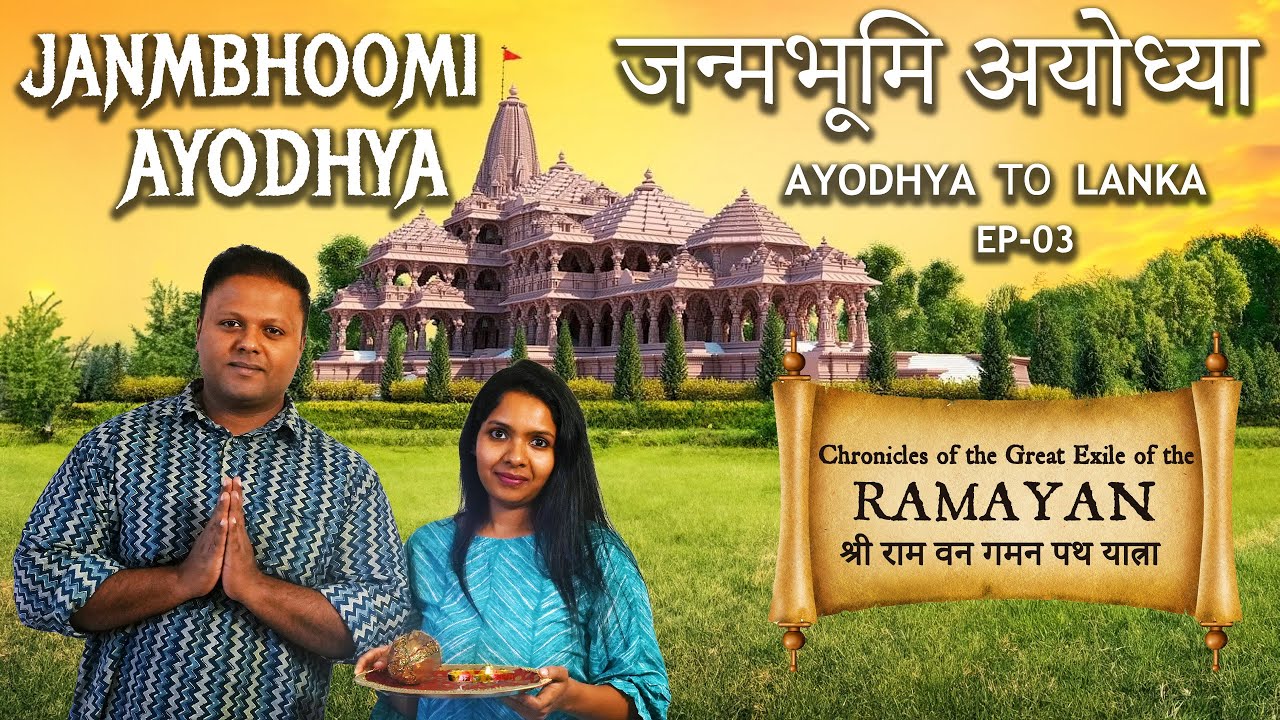
Hanuman Garhi Ayodhya – Temple of Lord Hanuman | Ram Janmbhoomi Episode 3 | Travelocracy
Welcome back to our channel and to the exciting world of Ramayana…!!!!
In the last episode you watched us visit “Ram ki Paidi” in Ayodhya near the “Sarayu River” waterfront and take “Sarayu Mata’s” blessings for our journey. We also met “High Tech Baba” who was very generous in telling us about the Qualities of Lord Shri Ram and how we should also try to possess those very same ones.
Episode 3 – राम जन्मभूमि – Ram Janmbhoomi Ayodhya | हनुमान गढ़ी – Hanuman Garhi
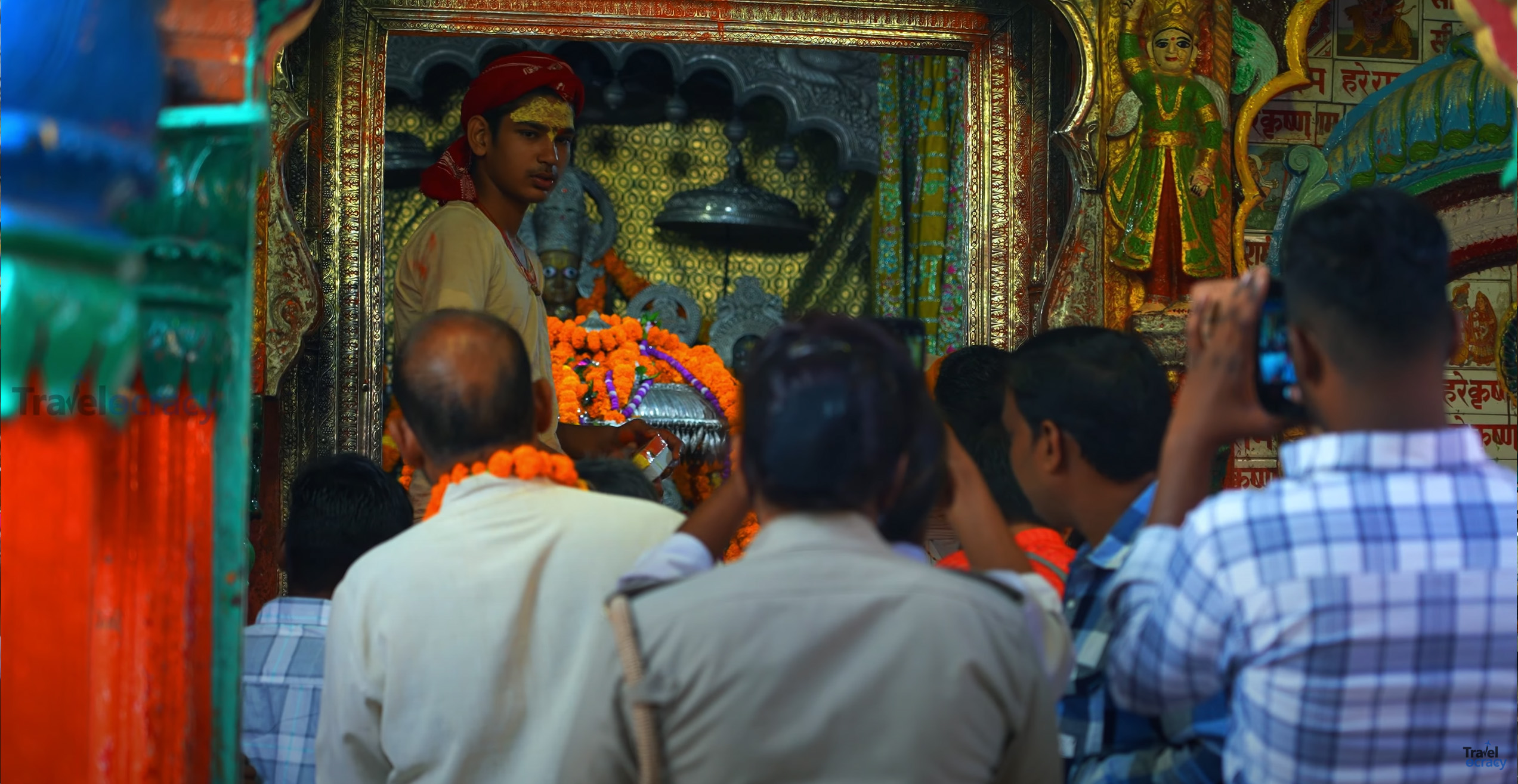
“In this episode, we visit the Hanuman Garhi Temple, which is believed to have originated in the 10th century. According to popular belief, devotees seeking the darshan (viewing) of Ram Lalla should first visit Hanuman Garhi for the darshan of Lord Hanuman. Inside the temple, there is a depiction or Idol of Anjani Mata, the mother of Lord Hanuman, with a young Hanuman sitting on her lap. It is said that after returning from Sri Lanka, Lord Hanuman resided in Hanuman Garhi to protect the kingdom of Lord Shri Ram, also known as Ramkot.”
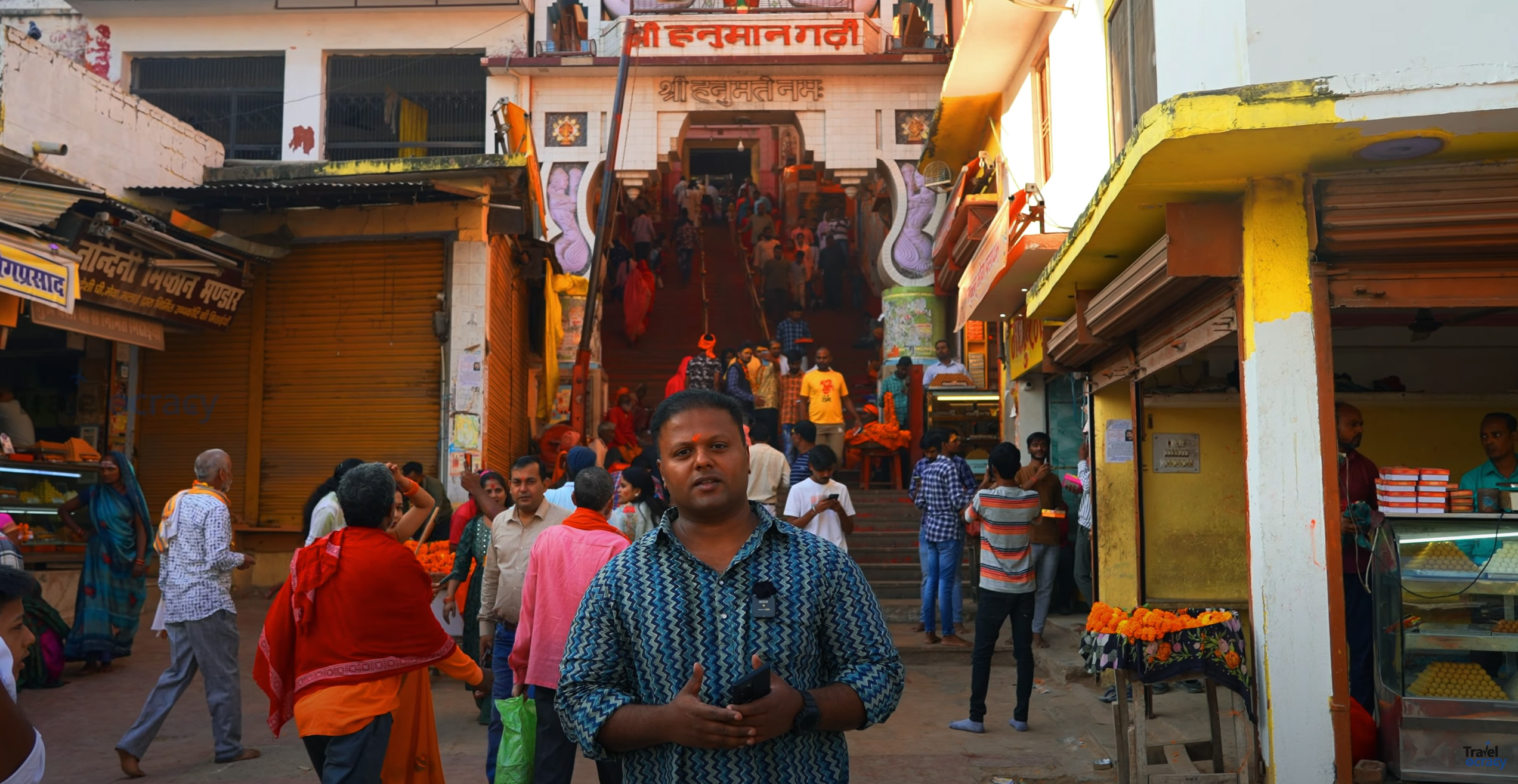
The temple premises are beautiful and calming. Hanuman Garhi is situated in the heart of Ayodhya. To reach the main temple, visitors must climb 76 steps. This temple is one of the most popular destinations for devotees of Lord Hanuman..
The temple complex is vast, spanning 32.5 acres. Hanuman Garhi also has properties and akhadas (places of practice with facilities for boarding, lodging, and training) in Vrindavan, Nasik, Ujjain, Jagannath Puri, and many other religious sites across India. Additionally, the Hanuman Garhi Temple is located very close to the Ram Janma Bhoomi in Ayodhya.
You may remember “High Tech Baba” from our last episode. Let’s hear some more stories from him.
He also agrees that after the war with the Demon King Ravana, Lord Hanuman started staying here to protect Ayodhya. He recounts that when Lord Ram was ready to leave Ayodhya, he asked Lord Hanuman to accompany him. However, Lord Hanuman chose to stay behind, telling Lord Ram that he would remain to protect this place.
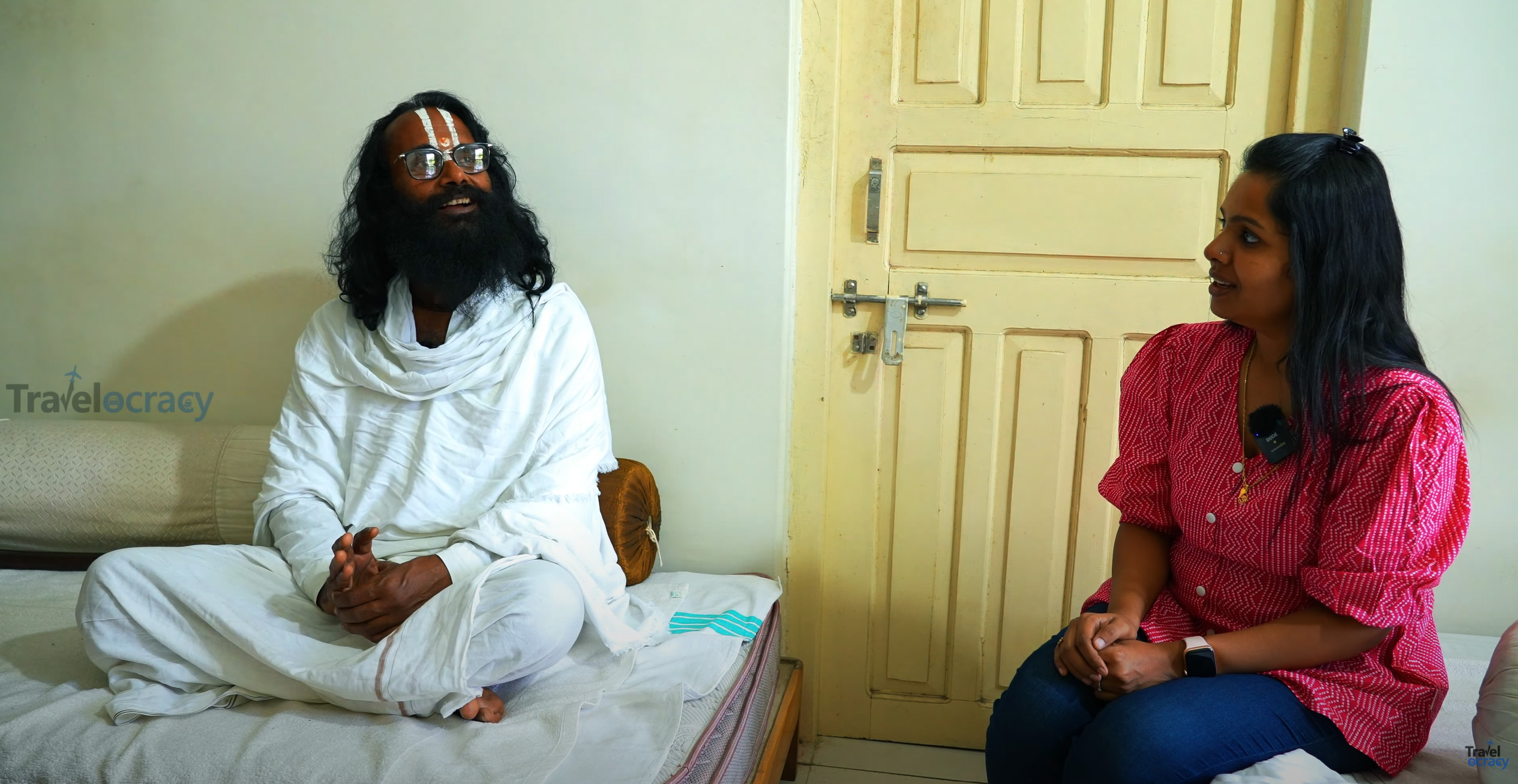
He promised to be the first to arrive wherever the Ramayana is read, and the stories and praises of Lord Ram are sung, and the last to leave.
It is believed that Mata Sita granted Lord Hanuman the boon of immortality. Hanuman is considered immortal and is believed to be still alive, waiting for the 10th avatar of Lord Vishnu. Lord Hanuman declared that he would stay on earth as long as there is chanting of “Ram Naam” (Lord Shri Ram’s name). Even after thousands of years, we continue to sing the stories of the Ramayana and pray to Lord Shri Ram.
High Tech Baba further explains that during the current age, Kalyug, Lord Hanuman is considered the king. This is why Hanuman’s temples can be found at every nook and corner of India, in various names and forms. He says that if you keep Lord Hanuman in your heart, it means Lord Shri Ram is also in your heart.
High Tech Baba is a firm believer that Lord Hanuman is the protector of Ayodhya. He cites a real-life example to support this belief: once, a bomb was planted in a temple in Ayodhya, but it never exploded because a monkey came and removed some wires from the bomb, diffusing it..
He further explains a few verses of the Hanuman Chalisa, which says that Lord Hanuman is the protector of sadhus (sages) and the destroyer of asuras (demons). Lord Hanuman embodies purity and is the remover of all impurities and obstacles.
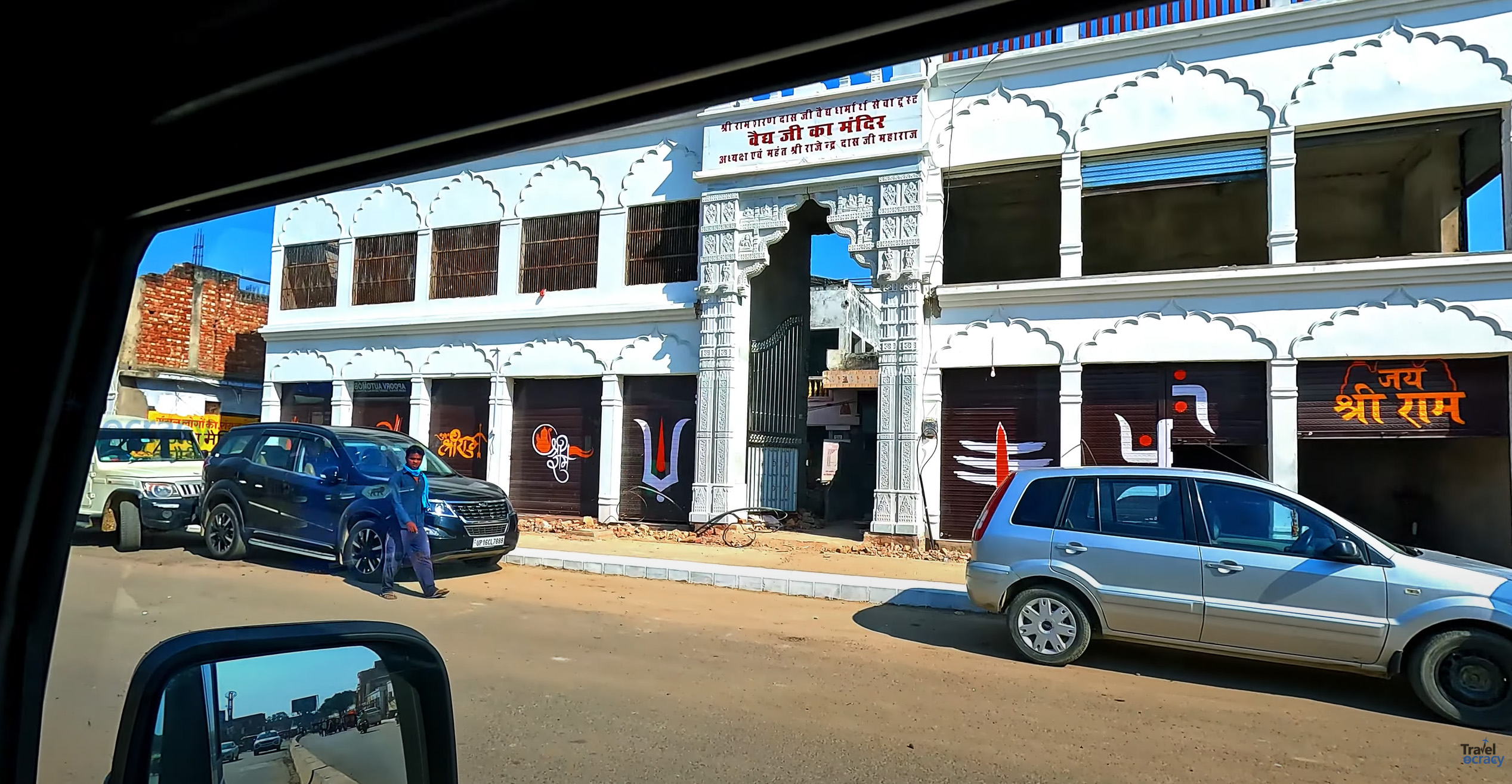
During our journey, we met our guide, Mr. Ravi Pandey. He informed us that the entire Ayodhya Dham Road is being reconstructed, with beautiful symbols depicting Lord Ram being painted all over Ayodhya, from Naya Ghat to Faizabad.
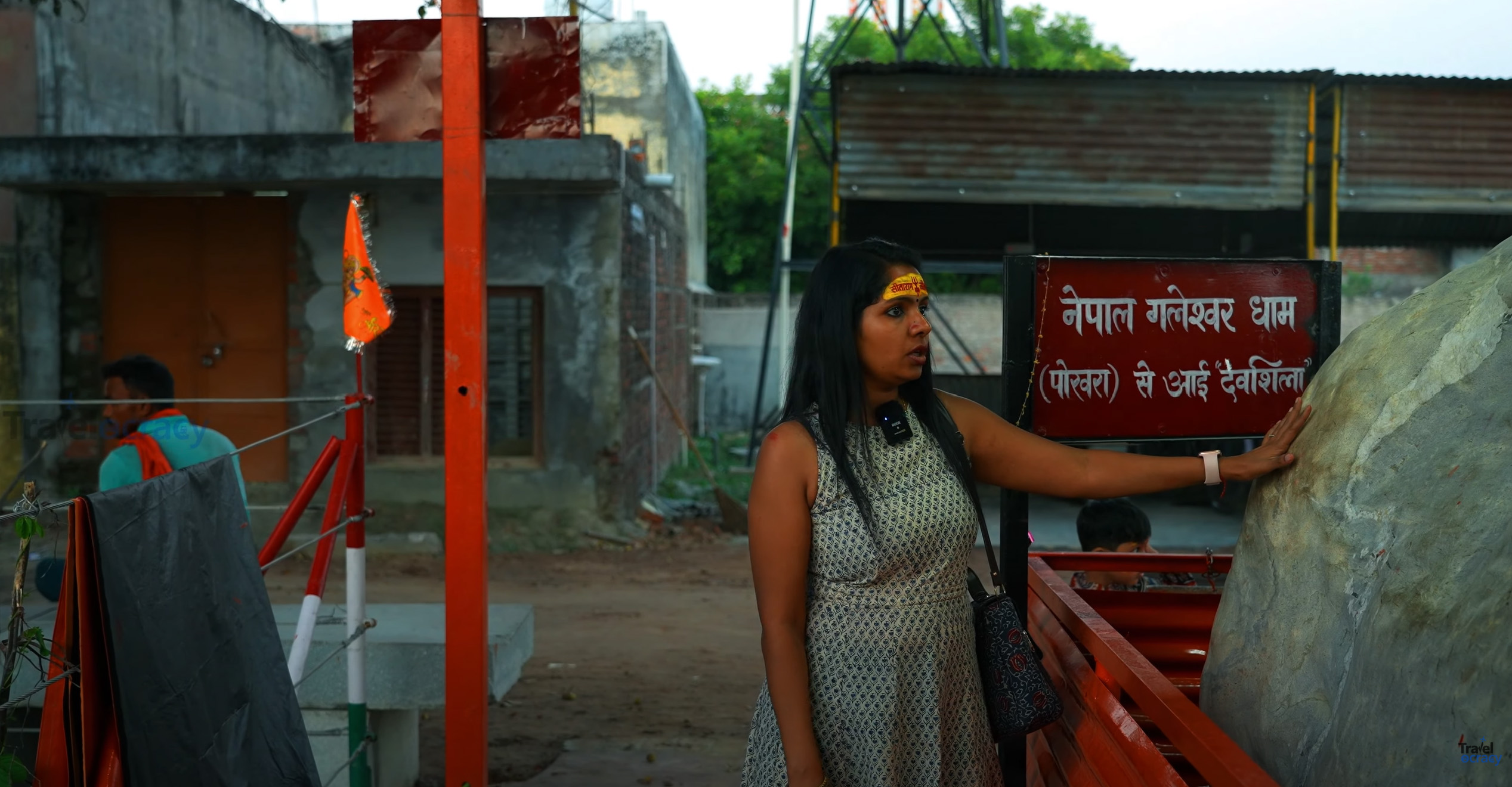
Our next destination in Ayodhya is the “Bhagwan Shaligram” Karyashala, where rocks are being shaped and constructed for the New Ram Mandir. These rocks have been sourced from various parts of the world.
Among the rocks or “shilas” we encountered:
- The “Shaligram” rock, known for its smooth surface.
- Rocks from Rajasthan, with a soft, slate-like texture akin to marble.
- RocksS named “Shweth” (White) and “Shyam” (Black) also from Rajasthan.
- A “Shivling” from Omkareshwar, brought here by Avdhoot Narmada Nand Ji Maharaj.
- Three black rocks from Karnataka.
Next, we visited the “Shree Ram Janmabhoomi Karyalaya” (office), where idols, shilas, and pillars for the New Ram Temple are meticulously crafted. Finished items are then transported to the New Ram Mandir complex. Artisans from across India are contributing their skills to this monumental project.
We paid our respects at the memorial of the Karsevaks who lost their lives during the demolition of Babri Masjid on December 6, 1992. In the video, you can see their photos and other relics, as well as the old Ram Mandir demolished by Babar, which originally dates back to the time of King Vikramaditya.
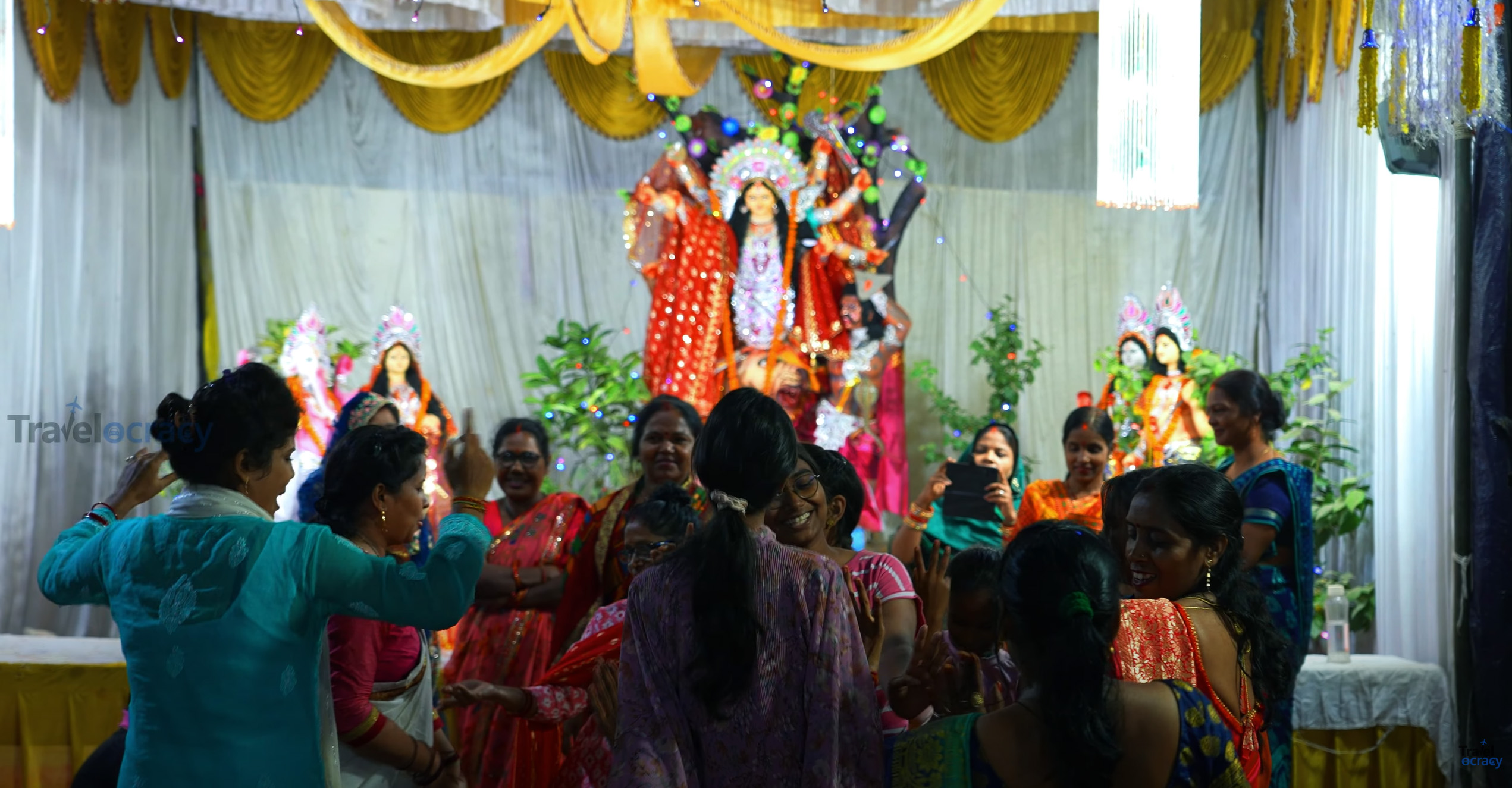
During Navratri, we visited Durga Pandals in Ayodhya, witnessing the enthusiasm of devotees even late at night, dancing and singing to devotional songs.
Our journey in Ayodhya has been profound, and though we felt reluctant to leave, we must continue to explore. Stay tuned for our next episode where we will cover “Dashrath Mahal,” “Kanak Bhawan,” and various other temples of Ayodhya.
Jai Shri Ram… !!!



Pingback: Ram Leela of Ayodhya – Kalki Avtar | अयोध्या की रामलीला | Ramayana Series Episode 5